
Inside GPT Translator: Architecture of a Modern AI Translation System
Why Modern Translation Systems Need More Than Models
Businesses that operate in multiple countries and language-speaking markets now require AI translation systems which deliver fast results and accurate translations and can handle high user demand. Companies no longer need to perform document translation because they can now convert all their content which includes websites and applications and customer dialogues and legal documents and live material. The current system operations show that AI translation systems need more than AI translation systems because AI translation systems need complete solutions to achieve their desired results. The system says all about model effectiveness & performance, and how well it goes through its lifecycle.
Initial development of machine translation systems used strict rule-based systems. Statistical models delivered better translation results but remained unable to handle modern language usage. The current translation systems use neural machine translation together with GPT-based systems which provide better translation results than previous translation methods. A system loses its ability to deliver stable output when its architectural framework lacks proper design because architectural elements function as fundamental system components. The design of modern platforms such as GPT Translator operates on two main areas which include their system design and their model intelligence capabilities. The development of automated translation systems from raw AI technology depends on architectural frameworks which transform AI capabilities into reliable operational systems.
Evolution from Rule-Based and Statistical MT to GPT-Based Systems
The Development of Machine Translation Systems From Rule-Based Approaches Through Statistical Methods Until Present-Day GPT Systems. Traditional translation systems followed predefined grammar rules. The systems operated successfully with basic phrases but they encountered difficulties when handling actual spoken language. Statistical machine translation reached better output results through its ability to learn from bilingual datasets. The system created sentences which contained nonsensical parts because it did not understand certain Spanish language elements. The introduction of neural machine translation systems through deep learning technology establishes that systems now process entire sentences as single units instead of their previous word-by-word approach. GPT-based systems go even further. The system performs translations by first analyzing the speaker's intent and tone before proceeding to their contextual environment. The new translation method provides more authentic human-like translation because it simulates the way people naturally write and speak. The advantages of the system only function when the system has a solid architectural structure.
The Limitations of Conventional Machine Translation
The older translation systems still suffer from significant problems despite the technological advancements. The systems operate without understanding brand voice and specialized terms and document formatting. The automated results to the user appear grammatically correct but they fail to match the required context. The business sector suffers from expensive mistakes which result from these presentational deficiencies.
The standard automated translation systems do not possess any flexibility. The systems find it difficult to acquire knowledge through user feedback and they lack the ability to support human evaluation. The modern AI translation system requires multiple components which handle various functions including context management and terminology control and quality assessment and learning process control instead of relying on a single translation system.
The Importance of System Architecture for Model Performance
A powerful model without structure is unreliable at scale. The architectural design controls three main processes which involve input preparation and context-based information storage and output assessment. The system determines whether AI can manage extensive operations while protecting confidential information and dealing with actual world situations.
The system architecture within GPT Translator platform maintains operational uniformity while decreasing operational faults and supporting ongoing system advancements. The model is only one part of a much larger translation ecosystem.
What Is GPT Translator?
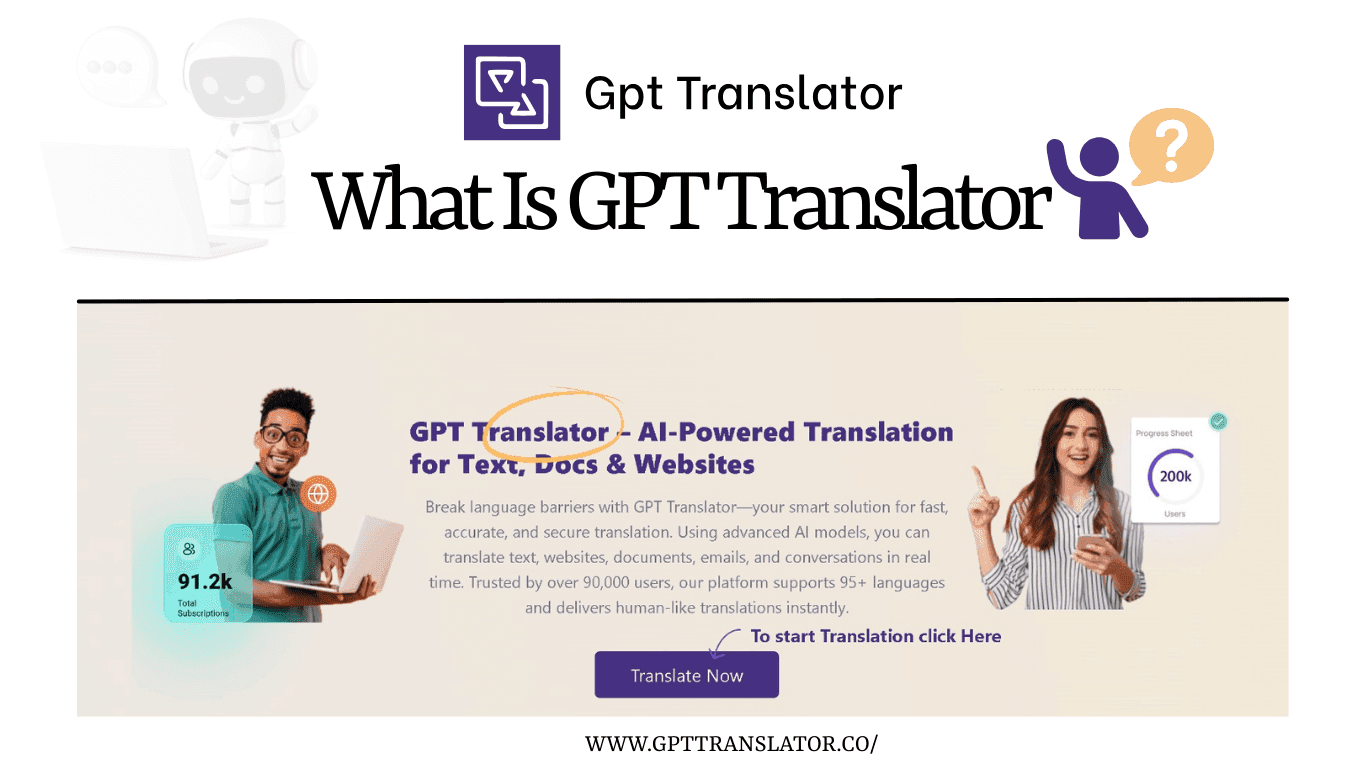
The system functions through structured pipelines which handle translations, instead of using the basic chatgpt translation. The system delivers enterprise solutions through its three main capabilities, which include terminology management and document formatting preservation and its ability to support human review processes. The system focuses on achieving accurate results during large-scale operations, instead of delivering only fluent results.
Difference Between a Model and a Full Translation Platform
A text generation system creates content through its model. The platform handles translation work as a comprehensive operational system. The system combines AI-driven translation with its multiple components which include preprocessing and validation and learning and security functions. The critical nature of this distinction.
Translation results lack consistency without platform architecture. The system provides businesses with consistent operational results which they can scale and maintain control over their operations. The system of GPT Translator connects the basic AI translation capabilities with complete production systems.
Core Goals: Accuracy, Scalability, Context Awareness
The architecture of GPT Translator is designed around three goals. The system uses accuracy to maintain complete meaning during all translation activities. The system enables efficient processing of multiple million word documents through its scalability feature. Context awareness ensures translators produce works which match the specific domain and tone and intent of the source material. The system operates through its various system components to achieve these objectives.
High-Level System Architecture Overview
The system architecture of GPT Translator operates through an end-to-end processing system which transforms input text into authenticated output results. The system includes multiple stages which perform specific tasks between the initial data intake and the final data output. The established operational sequence functions as the backbone which supports efficient machine translation throughout extensive multilingual translation projects.
The main functions of GPT operate through its central engine which uses surrounding services to determine its operational methods. The services create restrictions which control model performance therefore preventing it from producing unpredictable behavior patterns.
End-to-End Translation Pipeline
The pipeline begins with input ingestion. The content undergoes analysis and cleaning before it enters the GPT processing stage. The output undergoes validation and formatting checks after the translation process completes. The method creates automated translation systems which deliver improved accuracy because it maintains consistent operational performance throughout extended translation processes.
The system uses GPT as its main processing unit which handles all logical operations. The system uses prompts and constraints to direct him while he performs his translation work. The system functions through collaboration with other systems. The combination of context layers glossary systems and post-processing modules enables GPT Translator to produce more accurate translations than standalone chatgpt translation.
Interaction Between AI Components and System Services
The system services execute essential functions which include routing and logging as well as assessing quality. AI components focus on language understanding. Their interaction ensures that AI for translation is both intelligent and controlled.
Input Processing and Pre-Translation Layer
The system requires text preparation before it can start the translation process. The AI receives structured content when this layer delivers clean data. The quality of output results depends on the quality of input which applies to advanced neural machine translation systems. Language detection identifies source and target languages. Normalization eliminates noise from the raw data, which includes deletion of encoding errors. Segmentation breaks content into manageable units while preserving meaning.
Handling Structured and Unstructured Content
Special methods are needed to handle structured content which includes JSON and HTML. The GPT Translator protects both tags and placeholders during its text translation process. The system divides unstructured content which includes documents and chats into separate logical segments. The system allows translate AI to handle different formats because it maintains both layout and functionality.
Context and Terminology Management Layer
The difference between literal translation and meaningful communication exists because context establishes this boundary. The GPT Translator system contains a specialized section which handles both terminology and context management tasks. The system establishes project and domain consistency by generating identical results across multiple projects.
Reliable services and innovative practices are here to await and testify for your constant endeavors. The controls transform artificial intelligence translation into a professional standard instead of maintaining its basic form.
How Context Is Injected Into GPT Prompts

Core Translation Engine: The GPT Layer
The GPT layer executes the main translation function. The process requires prompt engineering to operate successfully. The model needs precise instructions to achieve both fluent and accurate results. The system provides a complete set of rules which define tone and formality and localization requirements.
The GPT-based translation system handles nuanced language better than traditional neural machine translation systems. The system uses reasoning to understand meaning instead of using pattern mapping. The system needs to control hallucination together with uncertainty.
Managing Hallucination and Ambiguity
The system uses three techniques to limit hallucination which include constraints and validation checks and fallback rules. People will either assess their confidence in ambiguous phrases or they will need human assessment. The process guarantees AI translation functions as a reliable system for output.
Post-Translation Processing
The output undergoes quality assessment procedures after the translation process. The consistency validation process verifies that the glossary items are correctly implemented. The formatting verification process maintains the original design and organization of the document. The error detection system identifies all potential problems.
The process of confidence scoring determines if the output meets established quality standards. This system enhances automated translation reliability through its additional layer of translation accuracy which functions well in business environments.
The Human-in-the-Loop Review
Architecture demonstrates that human experts continue to maintain their importance during times of fast technological development. The GPT Translator system uses a human-in-the-loop system to manage its critical information processing needs. The system triggers reviews when it detects specific confidence score thresholds or particular content types.
Linguists provide corrections and feedback. The system uses this feedback to enhance future machine translation results.
Learning and Optimization Layer
The system features an ongoing improvement process as its primary characteristic. The system allows users to submit feedback which results in prompt adjustments and glossary updates. The system uses quality metrics to monitor its operational progress throughout different periods.
The system uses quality metrics to monitor its operational progress throughout different periods. The system tracks its operational performance through multiple time periods by using quality metrics.
Scalability, Performance and Security
Activities instead of functioning as an unchanging translation tool. The system needs effective batch processing and reduced delay times to manage its extensive workload. The GPT Translator system enables horizontal expansion which allows it to handle large-scale translation operations. Security holds equal importance to other business priorities. Sensitive information protection requires data privacy measures and encryption methods and compliance procedures. Businesses need to consider these factors when using ChatGPT translation services.
Actual Examples of Application
The GPT Translator tool helps software as a service businesses to localize their services which facilitates their operations across different international markets. Enterprises find the system valuable because it helps them manage their documents and operational resources. The customer support teams use the system to communicate with customers who speak different languages.
The architectural design of the system allows AI translation technology to deliver operational results that extend beyond basic text translation functions.
Future of GPT-Based Translation Systems
The future of translation will use multimodal systems which combine text and interface elements and voice components. More precise results will come from advancements in deeper domain adaptation. Autonomous localization systems may manage entire workflows without manual intervention.
The system architecture needs to support these advancements because they depend on system architecture not only on model enhancements.
Why Architecture Defines Translation Quality
Translation quality depends on multiple factors which include AI technologies but not exclusively on them. The complete system access to AI systems determines the level of performance which AI systems will deliver. GPT Translator shows that artificial intelligence translation systems need architecture design to achieve dependable performance.
The system provides more than machine translation because it combines GPT reasoning with structured pipelines and human feedback to manage context. The system functions as a trustworthy translation platform which can grow to meet future requirements.The system operates as a reliable translation platform which can expand its capabilities to handle future demands. The architectural design of modern translation systems serves as the primary factor which distinguishes their capabilities.