
Building a Reliable Translation Workflow for JSON YAML and PO Files

The Real Issue Behind Localization Delays
Human intervention leads to errors and slow process. The majority of localization teams are still following the process of copying and pasting text checking the formatting line by line and sending files back and forth between the developers and the translators. This antiquated arrangement results in delays misunderstanding and consequently loss of engineering time. A missing bracket a wrong placeholder or a wrongly translated parameter can easily cause bugs that will tarnish the user's trust. Companies want speed and quality at the same time but the conventional workflows force them to select one over the other. This is the point where the GPT translator introduces efficiency, transparency and control in the process thereby transforming the laborious localization cycles into predictable delivery.
How AI Translation Workflow Automation Helps
AI supports humans not replaces them. There’s a well known fear that AI will take over translation completely. But the reality is different GPT translation, ChatGPT translation and AI translation workflow tools lessens the burdens of repetitive tasks to bring the translators´ focus on accuracy, meaning and cultural relevance. Automated systems do by identifying what should be translated and what can stay unchanged. This way the whole process of global releases becomes smoother. Companies enjoy quicker turnaround time and translators do a good job delivering better quality work. It’s a win-win situation for both parties and the end users.
A Smarter Way to Translate JSON Files
Protecting structure while delivering clear language. Almost every modern interface runs on JSON. However, translation errors occur when the systems cannot distinguish between the parts of the file that contain content and the parts that contain code. With the use of GPT translate tools only the text that is visible to users is translated. The keys are left unchanged. The formatting is preserved. Review becomes easier as the localization teams can see exactly what has changed. Developers are able to avoid stressful “fixes” before launch and product releases are kept on schedule for every market.
YAML and PO Files Deserve Equal Attention
Consistent localization across every update. YAML and PO files are essential components of large software products with multiple languages available for messages, settings, dashboards and notifications. The fast pace of feature evolution makes it easy to overlook translations for new strings or to have duplicate content across languages. The use of ChatGPT translate automation eliminates this issue by syncing only the updated content. Besides, it checks placeholders, punctuation and spacing to guarantee that every translation is in alignment with the brand language and technical requirement. Thus, customers in all countries are getting the same high-quality service that has been polished.
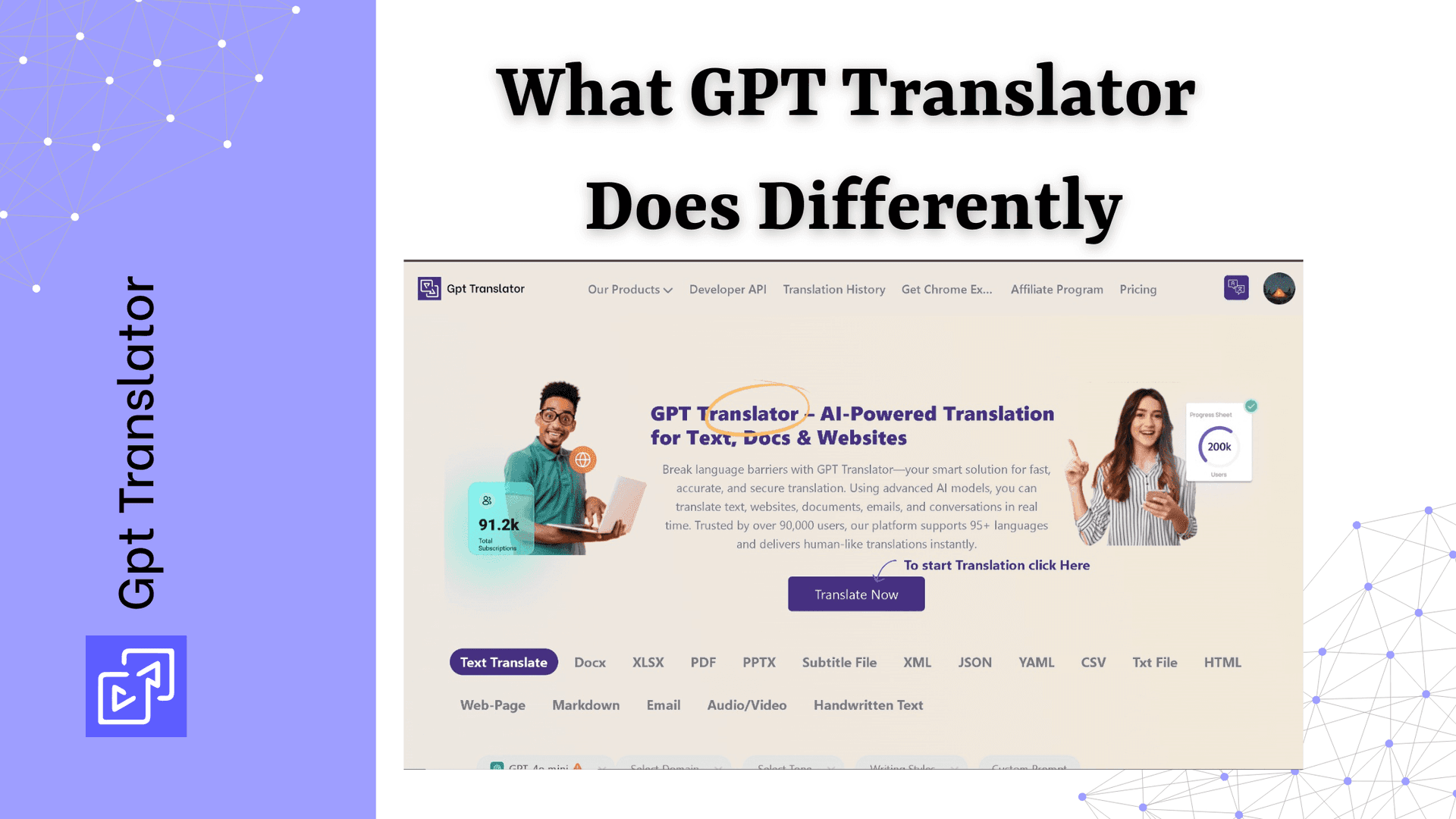
What GPT Translator Does Differently
Real-World Impact
Faster launches with fewer mistakes. A fintech startup which is making forays into Europe decided to use GPT Translator for the translation of their app in hours instead of the weeks it would take with the manual process. They reduced the time for localization by half and at the same time they made the messaging clearer. Another SaaS company which was managing 15 languages has seen a reduction in terminology errors after they had started to do automated checks. The amount of support tickets they received that were related to translation confusion decreased dramatically. Companies report higher customer satisfaction when translation workflows are automated and structured across all industries.
Key Benefits at a Glance
Productivity, accuracy and confidence in every release • Fast translation cycles • Structure-aware automation • Language consistent with the brand • No formatting issues • Collaboration made easier • Scalability for any number of languages • Improved version control • Localization costs reduction
The Importance of the Human Touch Is Irrefutable
Merging AI speed and language skills. Even with the most sophisticated GPT translation systems, human intervention is still necessary. While AI produces the translation and safeguards the structure, linguists enhance the tone, meaning and technical language. Developers fix fewer problems and spend more time creating desirable features. This compromise gives rise to both speed and genuine portrayal machine only processes are not capable of delivering such a promise.
Quality Assurance Is One of the Steps to Be Done
Automated smart checks develop trust in technology. A dependable ai translation tool procedure involves certain automatic checks that concern the format of the files, the use of placeholders and the consistency of the content. AI detection of errors related to the structure at an early stage leads to reduction of redoing work and support for seamless deployments. Companies hesitate no more to release updates in different languages fearing sudden issues with the interface or miscommunication due to wrong translation. When quality control is integrated in the pipeline localization is turned into an uninterrupted process that goes hand-in-hand with the development cycle rather than being a last-minute hindrance.
Making Your Company Ready for the Global Market
Localization is to be in line with the product growth. As businesses move into unfamiliar territories, they find their translation needs skyrocketing. Teams still relying on outdated processes not only have a hard time coping but also risk losing the opportunities for growth. When companies opt for the automation of Chat GPT translator right from the beginning they are always in a position to cater to worldwide audience from day one. No matter whether you require translation of 100 lines or 100,000 lines the product remains robust and the transition is smooth.
Make Translation a Strength

Start smart localization today
Change the way you work with the right AI partner. If your team is looking for technical free, fast and reliable translation for JSON, YAML and PO files now is the time to modernize your workflow. Allow GPT Translator to streamline the multilingual delivery so that your software is understandable to all users anywhere.
Try out the GPT Translator and create a workflow that is aligned with your global expansion.